Shoulder Pain in Throwing and Overhead Sports: A Houston Orthopedic Guide for Baseball, Volleyball, and Tennis Players
Dr. Schauder explains common rotator cuff and labral problems in overhead athletes, early warning signs to watch for, conservative care options, and when arthroscopic surgery may be appropriate for Houston-area players.

Introduction: Why shoulder health matters for throwers
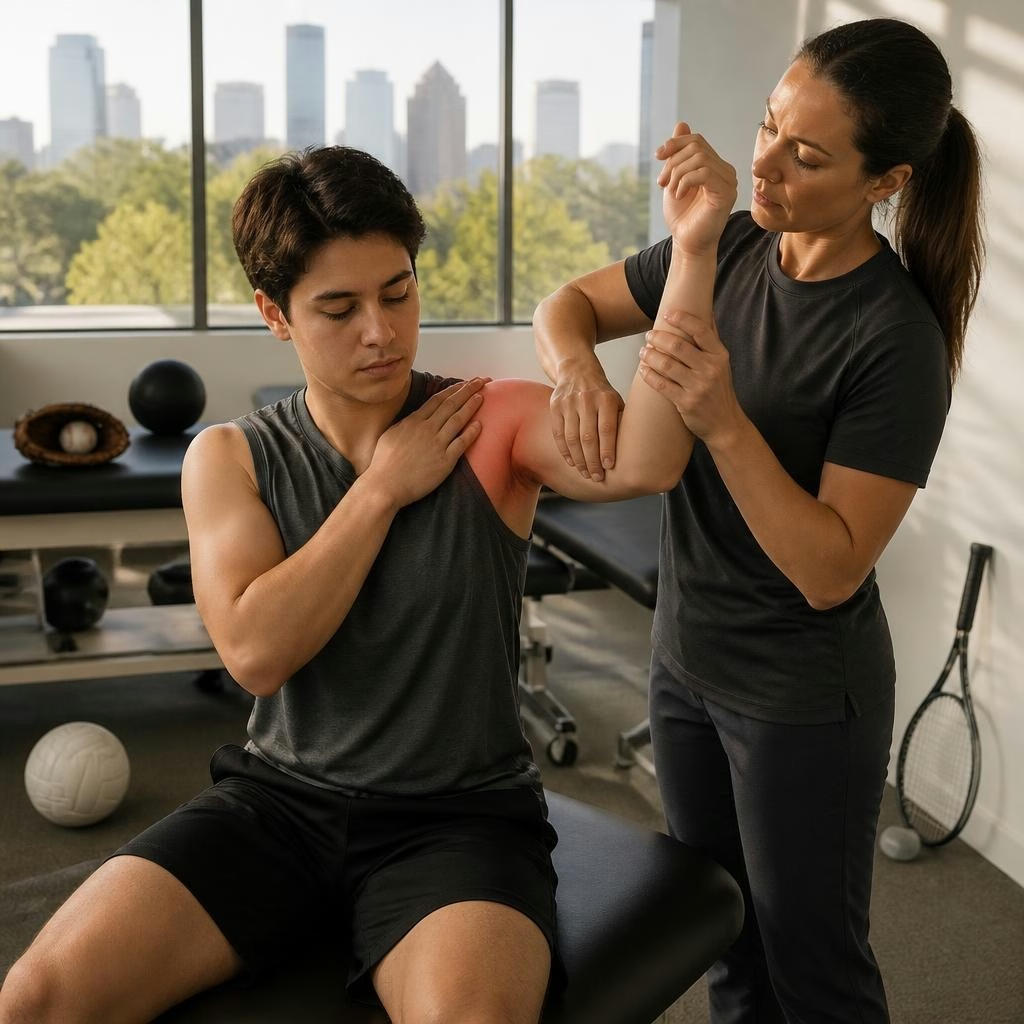
As an orthopedic surgeon who has treated athletes for more than two decades, I understand how shoulder pain can disrupt competition, training, and everyday life. Throwing and other overhead sports place unique stresses on the shoulder joint — particularly on the rotator cuff tendons and the labrum — so early attention to pain or loss of function can often prevent longer interruptions to play.
How the shoulder works in throwing athletes
The shoulder is a shallow ball-and-socket joint stabilized by dynamic structures: the rotator cuff muscles and tendons, the labrum (a rim of cartilage around the socket), and surrounding ligaments and muscles. Overhead athletes repeat high-velocity motions that load these tissues in rapid succession: rapid external rotation and forceful internal rotation during the throw, spike, or serve. That repetition, combined with acute impacts or poor mechanics, can lead to tendon irritation, partial tears, or labral injury over time.
Common injuries: rotator cuff and labral problems
Two of the most common causes of pain in overhead athletes are rotator cuff tendinopathy or tears and labral lesions. Rotator cuff issues often present as pain with lifting or throwing and weakness with external rotation or elevation. Labral problems — including superior labral (SLAP) tears — commonly cause deep pain, clicking, or a sense of instability, especially during acceleration phases of throwing. Both conditions can range from mild irritation to more significant structural injury.
Early warning signs to take seriously
Pay attention to changes in performance or persistent symptoms. Warning signs that deserve evaluation include: persistent shoulder pain that doesn’t improve with a few days of rest, a decrease in throwing velocity or accuracy, a new sense of looseness or catching inside the joint, nighttime pain that wakes you, or progressive weakness. Addressing these signs early makes non-surgical treatment more likely to succeed.
Non-surgical care: first-line steps for most players
Initial management emphasizes activity modification, a supervised rehabilitation program, and addressing contributing factors such as shoulder and scapular strength, thoracic mobility, and throwing mechanics. Physical therapy focused on rotator cuff and scapular stabilizers, gradual interval throwing programs, and temporary reduction in pitching or hitting volume are commonly effective. In many cases this conservative approach restores function without surgery.
When arthroscopic surgery may be needed
If symptoms persist despite a well-structured rehabilitation program, or if there is a significant structural tear that limits performance or causes instability, arthroscopic shoulder surgery may be recommended. At Bay Area Sports and Orthopedics we provide arthroscopic shoulder procedures, including rotator cuff repair when appropriate. Arthroscopy allows us to assess the joint directly, address labral tears or tendon damage with minimally invasive techniques, and begin a tailored post-operative rehabilitation plan aimed at returning athletes to play safely.
Recovery timeline and return-to-play considerations
Recovery varies by the nature of the injury and the procedure performed. Minor arthroscopic procedures may allow a faster progression back to sport, while larger rotator cuff repairs require a longer, staged rehabilitation process focused on protecting the repair, restoring range of motion, and rebuilding strength and endurance. Return-to-throwing programs are individualized; patience and adherence to rehabilitation guidelines reduce the risk of re-injury.
Working with Bay Area Sports and Orthopedics in Houston
If you are a baseball, volleyball, or tennis player in the Houston area experiencing shoulder pain, an evaluation that includes a focused history, physical exam, and appropriate imaging helps determine the best course of action. My approach prioritizes non-operative management when possible, clear communication about options, and coordinated care when surgery is the best choice. Patients and families often tell us they appreciate the caring attitude and attentive staff — and some have reported quick recoveries following treatment and follow-up care. If you’d like an assessment, our clinic on Gulf Freeway is available for consultations to discuss symptoms, next steps, and a plan tailored to your goals.
Customer review


Article by
Dr. Schauder - Houston
Dr. Schauder was born in Detroit, Michigan. He received his undergraduate degree from Albion College, Albion, Michigan in 1981 Summa Cum Laude with a 4.0 GPA, Phi Beta Kappa, Albion Fellow. Dr. Schauder is an orthopedic surgeon with over 20 years of experience in orthopedic surgery and sports medicine . Dr. Schauder is very active in the sports community. He has played football through college and has played and coached his sons in soccer. Dr. Schauder has been the team physician for Alvin High School Sports since 1990. Our concern is for the total well-being of the patient and to return the patient back to their active lifestyles including sports and work as soon as possible.