Rotator Cuff Tear or Shoulder Strain? Practical Advice for Lifting, Work, and Sleep in Houston
As an orthopedic surgeon who treats many work- and sports-related shoulder problems, I explain how to tell a likely rotator cuff tear from a strain, simple ways to protect your shoulder at work and while you sleep, and when an exam and imaging may point toward surgical repair.
How a Tear and a Strain Often Feel Different
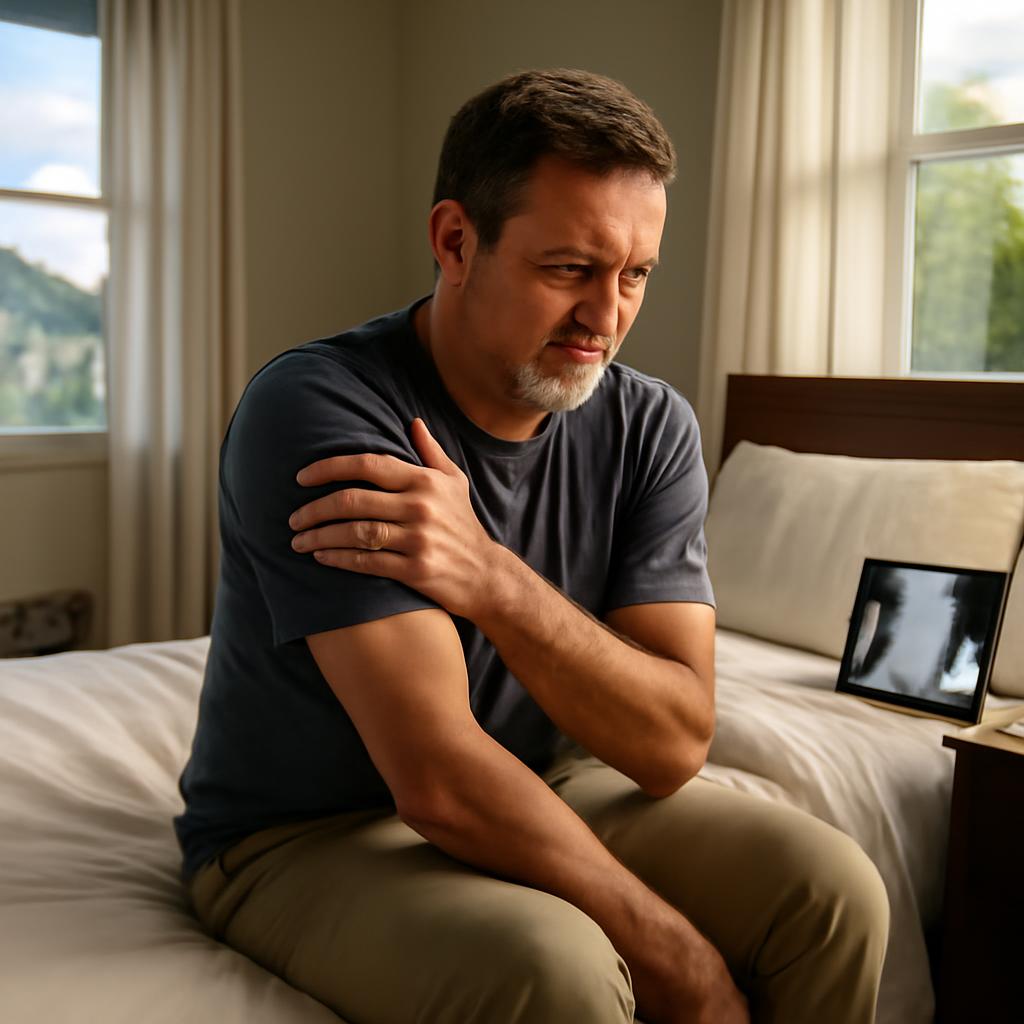
Shoulder pain from a rotator cuff tear and pain from a strain or tendinitis can overlap, but there are some helpful differences to watch for. A tear—especially a larger or full-thickness tear—commonly causes persistent weakness when lifting the arm or reaching overhead, and it may produce sharp pain with certain movements. A strain or tendinopathy more often causes aching discomfort that worsens with activity and improves with rest. Night pain that wakes you or prevents comfortable sleep is common with both problems, but progressive loss of strength or sudden inability to raise the arm points more toward a structural tear that needs closer evaluation.
Work and Lifting: Movements that Make Shoulder Problems Worse
Repetitive overhead work, frequent heavy lifting, or sudden awkward lifts are frequent culprits. Tasks that force you to reach away from your body—carrying loads with an extended arm, lifting above shoulder height, or using forceful internal rotation—place extra stress on the rotator cuff and can aggravate both strains and tears. When possible, modify tasks so you lift with your whole body, keep loads close to your torso, use two hands, and avoid extended one-arm overhead work. For jobs that require repeated overhead motion, plan regular short breaks and rotate tasks when you can to reduce cumulative strain.
Simple Home and Sleep Changes That Often Help
Small adjustments can reduce pain while you’re healing. Avoid sleeping on the affected shoulder; instead try sleeping on your back or the opposite side with a pillow tucked under the injured arm to support it. Use a small pillow between your elbow and body to prevent the shoulder from rolling forward. During the day, avoid sustained overhead reaching and limit lifting heavier objects until pain and strength improve. Short periods of ice (10–15 minutes) after heavy use can help reduce inflammation; a warm shower or gentle heat before activity can loosen stiffness. If a sling provides comfort for short periods, it can be useful — but prolonged sling use slows motion recovery, so it shouldn’t be a long-term solution without guidance.
What I Look For in the Clinic: Exam and Imaging
In the clinic I combine a focused history with a hands-on exam: I assess range of motion, specific strength tests, and how your shoulder responds to commonly used maneuvers. That helps separate mechanical weakness from pain-limited motion. If the exam suggests a possible tear or if symptoms persist despite conservative care, I typically recommend imaging. Plain X-rays can check bone alignment and arthritic changes; ultrasound can evaluate rotator cuff tendons in real time; MRI gives a detailed view of tendon quality and muscle condition. Imaging helps determine whether nonoperative treatment or surgical repair is the better path.
When Repair Is Considered: Realistic Expectations
Not every rotator cuff problem requires surgery. I consider repair when imaging shows a significant tear and the patient has true loss of strength, persistent pain despite appropriate therapy, or functional limitations that interfere with work or sport. For many patients, arthroscopic rotator cuff repair and minimally invasive techniques are options that address the torn tendon while limiting other tissue trauma. The decision depends on tear size, tendon quality, patient goals, and overall health — we’ll review the risks and expected course together and tailor the plan to your activity needs.
Rehabilitation and Returning to Activity
Rehab is equally important whether you treat the shoulder nonoperatively or after surgery. Early guided physical therapy focuses on protecting healing tissue while gradually restoring range of motion, then progressing to strengthening and functional training specific to your job or sport. Timelines vary: small strains and tendinopathies often improve over weeks with targeted therapy, while repair and full recovery from a large tear take longer. I’ve seen patients report strong recoveries within a few months after appropriate treatment and rehabilitation, and my goal is always to help you return safely to the activities you value.
When to Schedule an Evaluation and What to Bring
If you have persistent shoulder pain, noticeable weakness, or activities you can’t perform because of your shoulder, it’s reasonable to schedule an evaluation. Bring a brief timeline of the problem, any imaging you already have (X-rays, ultrasound, MRI), and a list of tasks or sports movements that cause trouble. In our visit we’ll review conservative measures you’ve tried, perform the exam, and determine whether further imaging or a referral for therapy is the next best step. Our office focuses on returning patients to active lifestyles, and we’ll work with you to create a practical plan tailored to your work and sports demands.
Customer review


Article by
Dr. Schauder - Houston
Dr. Schauder was born in Detroit, Michigan. He received his undergraduate degree from Albion College, Albion, Michigan in 1981 Summa Cum Laude with a 4.0 GPA, Phi Beta Kappa, Albion Fellow. Dr. Schauder is an orthopedic surgeon with over 20 years of experience in orthopedic surgery and sports medicine . Dr. Schauder is very active in the sports community. He has played football through college and has played and coached his sons in soccer. Dr. Schauder has been the team physician for Alvin High School Sports since 1990. Our concern is for the total well-being of the patient and to return the patient back to their active lifestyles including sports and work as soon as possible.