Meniscus Repair vs. Meniscectomy: What Houston Patients Should Know Before Knee Surgery
A practical guide from an experienced orthopedic surgeon explaining the difference between repairing and trimming a torn meniscus, how each choice can affect long-term knee health, and what active adults in Houston can expect for recovery and return to sport.
Why the choice matters for active adults
If you play sports, work on your feet, or simply want to stay active, a torn meniscus is not just a short-term problem — it can affect how your knee feels and performs for years. Deciding between saving the meniscus (repair) and removing the damaged portion (partial meniscectomy) is one of the most important choices you and your surgeon will make, because it influences pain relief, stability, and long-term joint health.
What the meniscus does and how it tears
The meniscus is a C-shaped piece of cartilage that cushions and stabilizes the knee. Tears happen in sports from twisting or direct contact, and they also occur over time from degeneration. Different tear patterns — simple vertical tears, radial tears, complex degenerative shredding — behave differently and respond to different treatments.
Repair vs. meniscectomy: the basic difference
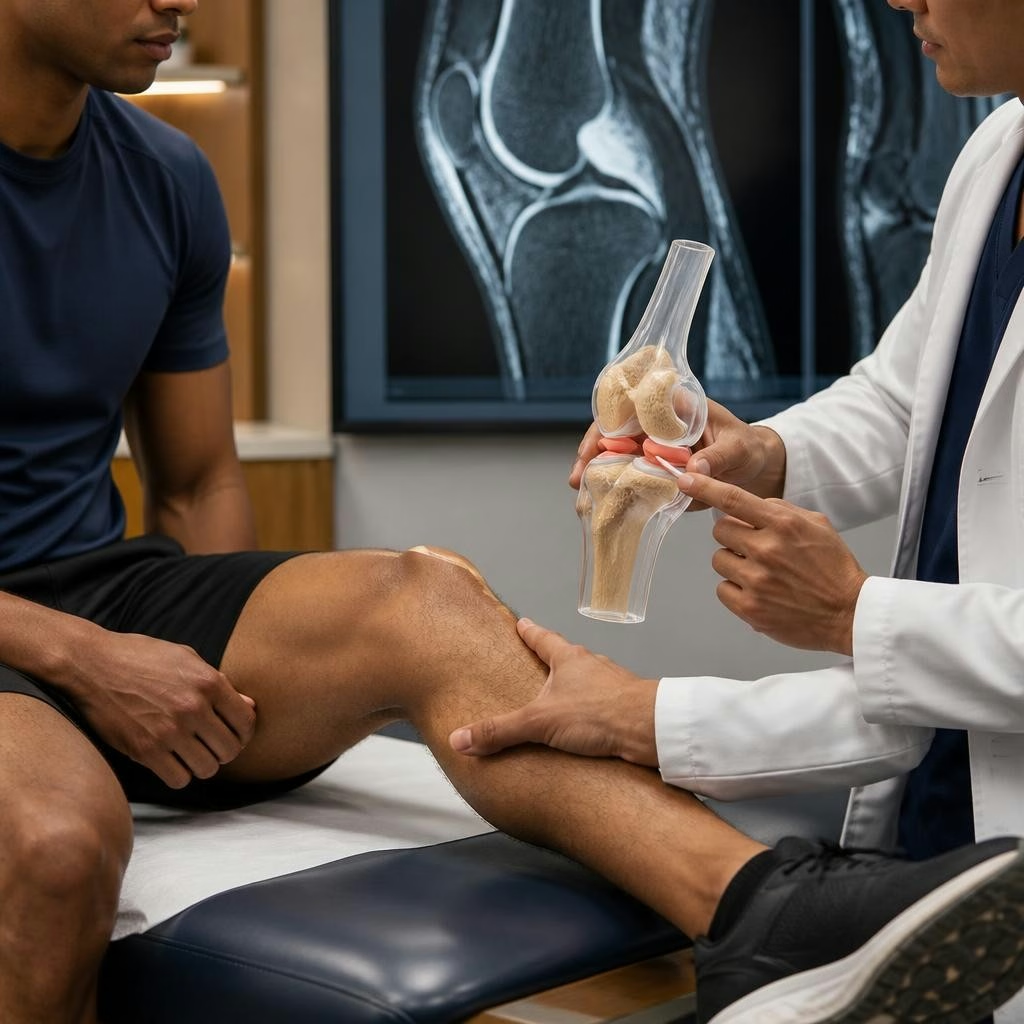
Meniscus repair means sewing the torn tissue back together so it can heal. A meniscectomy (usually partial) trims away the torn or unstable portion and smooths the remaining meniscus. Both procedures are typically done arthroscopically through small incisions, but the goal is different: repair preserves tissue; meniscectomy removes damaged tissue to relieve symptoms.
How we decide which option is right
The choice depends on several factors: the tear’s location and pattern, how long ago the injury happened, your age and activity goals, and the condition of the surrounding cartilage. Tears in the outer (better‑vascularized) portion are more likely to heal after repair. Acute, repairable tears in younger or athletic patients are often treated with repair, while chronic, degenerative, or irreparable tears may be managed with partial meniscectomy. We use your history, exam, and imaging (typically MRI) to guide a patient-centered decision.
Long-term knee health: why preservation often matters
Preserving as much healthy meniscal tissue as possible is generally associated with better long-term joint protection because the meniscus helps distribute load across the knee. When meniscal tissue is removed, the remaining cartilage can experience higher stresses over time. That doesn’t mean repairs are always the right choice, but when a repair is feasible it is often preferred for younger, active patients who want to minimize the chance of future joint degeneration.
Recovery and rehabilitation: what to expect
Recovery differs between the two procedures. Meniscus repair commonly requires a period of protected weight bearing and activity restriction to allow healing; rehabilitation is focused on restoring motion and gradually rebuilding strength over several months. Partial meniscectomy typically allows a quicker return to normal activities because healing of the meniscus is not required, but strengthening and neuromuscular training are still essential to reduce re‑injury risk. Exact timelines vary with the tear, the procedure, and your progress in physical therapy.
Returning to sports and daily life
Return-to-play decisions are individualized: they consider the sport, position, the repaired tissue’s healing, and your functional tests. A graded approach — regaining range of motion, strength, and sport‑specific skills — helps reduce the risk of recurrence. Over the years I’ve worked with athletes at many levels and emphasize realistic goals and a structured rehabilitation plan to get people back to the activities they love.
How we approach this at Bay Area Sports and Orthopedics
At our Houston practice I combine experience in arthroscopic knee surgery and meniscal repair with a team approach to rehabilitation. We review your imaging, discuss the pros and cons of repair versus meniscectomy in plain language, and tailor the plan to your activity goals. Many patients appreciate our careful, compassionate approach and the support of our staff throughout recovery. If you’re facing this decision, bring prior films and a clear sense of your activity goals — we’ll evaluate your options and outline the likely recovery and next steps from our clinic at 12827 Gulf Freeway.
Article by
Dr. Schauder - Houston
Dr. Schauder was born in Detroit, Michigan. He received his undergraduate degree from Albion College, Albion, Michigan in 1981 Summa Cum Laude with a 4.0 GPA, Phi Beta Kappa, Albion Fellow. Dr. Schauder is an orthopedic surgeon with over 20 years of experience in orthopedic surgery and sports medicine . Dr. Schauder is very active in the sports community. He has played football through college and has played and coached his sons in soccer. Dr. Schauder has been the team physician for Alvin High School Sports since 1990. Our concern is for the total well-being of the patient and to return the patient back to their active lifestyles including sports and work as soon as possible.