Houston Worker’s Guide to Muscle, Tendon, and Ligament Injuries on the Job
A practical, first-person guide from an orthopedic surgeon on identifying strains, sprains, and tendon tears from lifting or repetitive work, when to seek specialist care, and realistic steps for a safe return to physically demanding jobs in the Houston area.
Why this guide matters for Houston workers
I’m Dr. Schauder at Bay Area Sports and Orthopedics in Houston. Over decades of treating athletes and workers, I’ve seen how muscle strains, tendon problems, and ligament sprains on the job can sideline people who need to earn a living and support their families. This guide explains how these injuries differ, common causes at work, how we evaluate them, and practical steps for a safe return to physically demanding duties.
What’s the difference: strain, tendon injury, and sprain
A muscle strain involves the muscle fibers or the junction where muscle meets tendon and usually results from overstretching or sudden force. Tendon problems range from inflammation (tendonitis) to partial or complete tears of the tendon itself. A sprain is an injury to a ligament, the tissue that stabilizes a joint, often caused by twisting or an awkward fall. Understanding which structure is involved helps set expectations for recovery and the right treatment path.
Common workplace causes and high-risk tasks
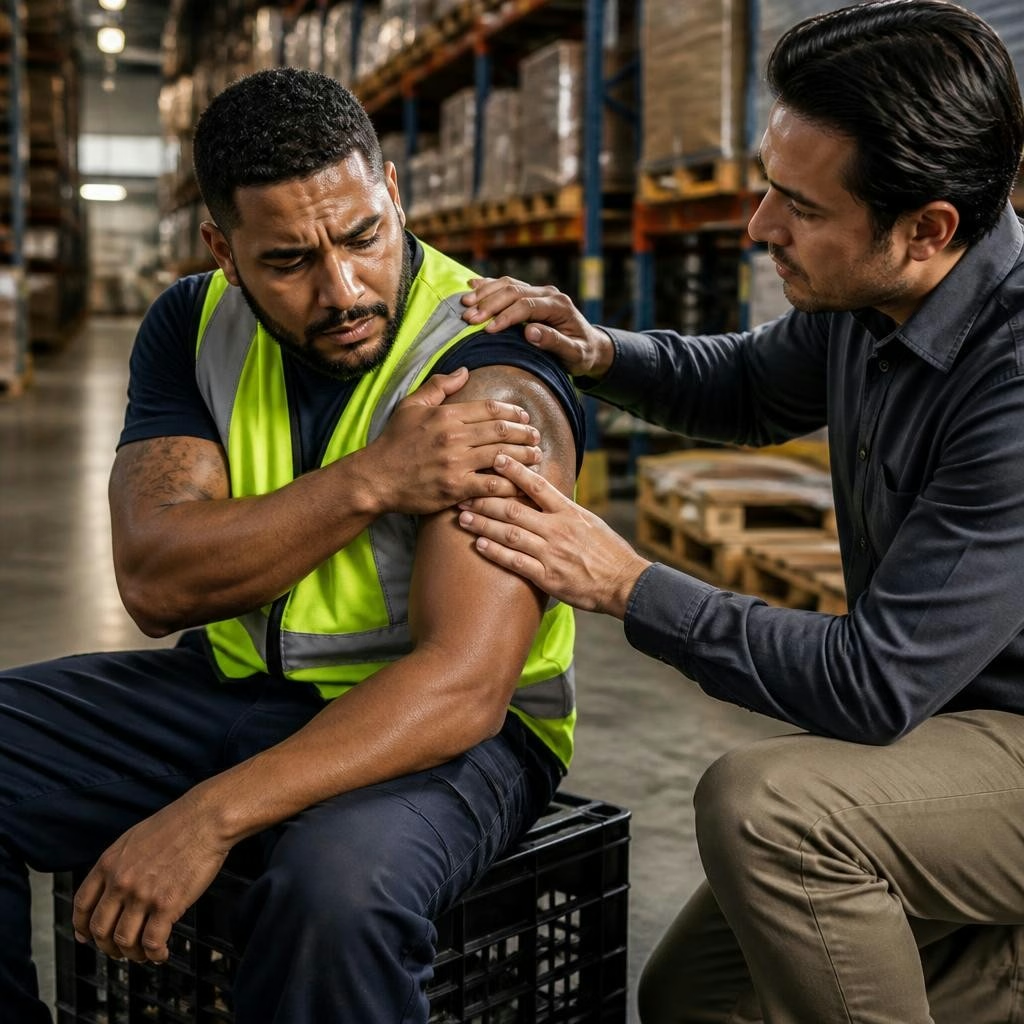
Injuries on the job commonly come from heavy lifting without proper mechanics, repetitive motions (reaching, gripping, overhead work), sudden twisting or falls, and forceful impact. Jobs in construction, warehousing, delivery, manual healthcare tasks, and any role with frequent overhead or repetitive use of the hands and shoulders are more prone to these problems. Identifying the task that caused the injury helps guide both treatment and workplace prevention.
How to recognize serious problems and when to seek care
Look for red flags: inability to move or bear weight, significant joint instability, a visible deformity, numbness or loss of circulation, or rapidly increasing swelling. For those signs, urgent evaluation is appropriate. If pain, weakness, or limited motion doesn’t start to improve with brief home measures or if symptoms prevent you from performing essential job tasks, schedule an orthopedic evaluation. Open wounds, severe deformity, or loss of feeling warrant immediate emergency care.
Evaluation: what to expect at an orthopedic visit
My first priority is a focused history and physical exam to assess pain, strength, motion, stability, and how the injury affects your work tasks. Imaging can clarify the diagnosis—X-rays to look for fractures, and advanced imaging such as ultrasound or MRI when we suspect tendon or ligament tears. We also consider your job demands when deciding on tests, because treatment is guided not only by the tissue injured but by what you need to do when you return to work.
Treatment options, goals, and realistic recovery steps
Treatment ranges from conservative care—activity modification, bracing or taping, targeted physical therapy, and a structured return-to-work plan—to procedures when indicated. For some tendon and ligament tears, surgical repair or reconstruction may be the best route to restore function for physically demanding jobs; for others, non-surgical care can be effective. Every case is individualized. As one patient shared after significant ankle and elbow injuries, coordinated care and follow-up helped him get back in good shape in about three months—an example of how a tailored plan can speed recovery for some people.
Practical steps for a safe return to physically demanding work
A gradual, work-focused progression is safest: start with protected or modified duties, use appropriate supports or tools, and advance based on pain control, strength, and function rather than a fixed date. Communicate with your employer about temporary restrictions and consider a work-conditioning program or job-specific therapy when available. Protective equipment, ergonomic adjustments, and training on body mechanics reduce the risk of reinjury when you return.
Where to get help at Bay Area Sports and Orthopedics
If you’re a Houston-area worker with persistent pain, weakness, or instability after a workplace incident, I encourage you to seek evaluation so we can preserve function and plan a safe return to work. At our clinic on Gulf Freeway I focus on treating muscle, tendon, and ligament injuries with both non-surgical and surgical options when appropriate, and my staff and I aim to provide practical, job-centered care. Contact our office to discuss your injury and the best next steps—our team’s experience and attention to follow-up are part of what helps patients recover and return to their jobs safely.
Customer review


Article by
Dr. Schauder - Houston
Dr. Schauder was born in Detroit, Michigan. He received his undergraduate degree from Albion College, Albion, Michigan in 1981 Summa Cum Laude with a 4.0 GPA, Phi Beta Kappa, Albion Fellow. Dr. Schauder is an orthopedic surgeon with over 20 years of experience in orthopedic surgery and sports medicine . Dr. Schauder is very active in the sports community. He has played football through college and has played and coached his sons in soccer. Dr. Schauder has been the team physician for Alvin High School Sports since 1990. Our concern is for the total well-being of the patient and to return the patient back to their active lifestyles including sports and work as soon as possible.