Houston Fracture Care 101: What to Expect After You Break a Bone
A practical guide from Dr. Schauder explaining how fractures are classified, why some breaks need surgery while others do not, and how an orthopedic team guides patients from emergency care through casting or surgery to rehabilitation.
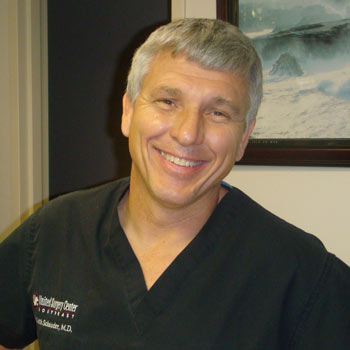
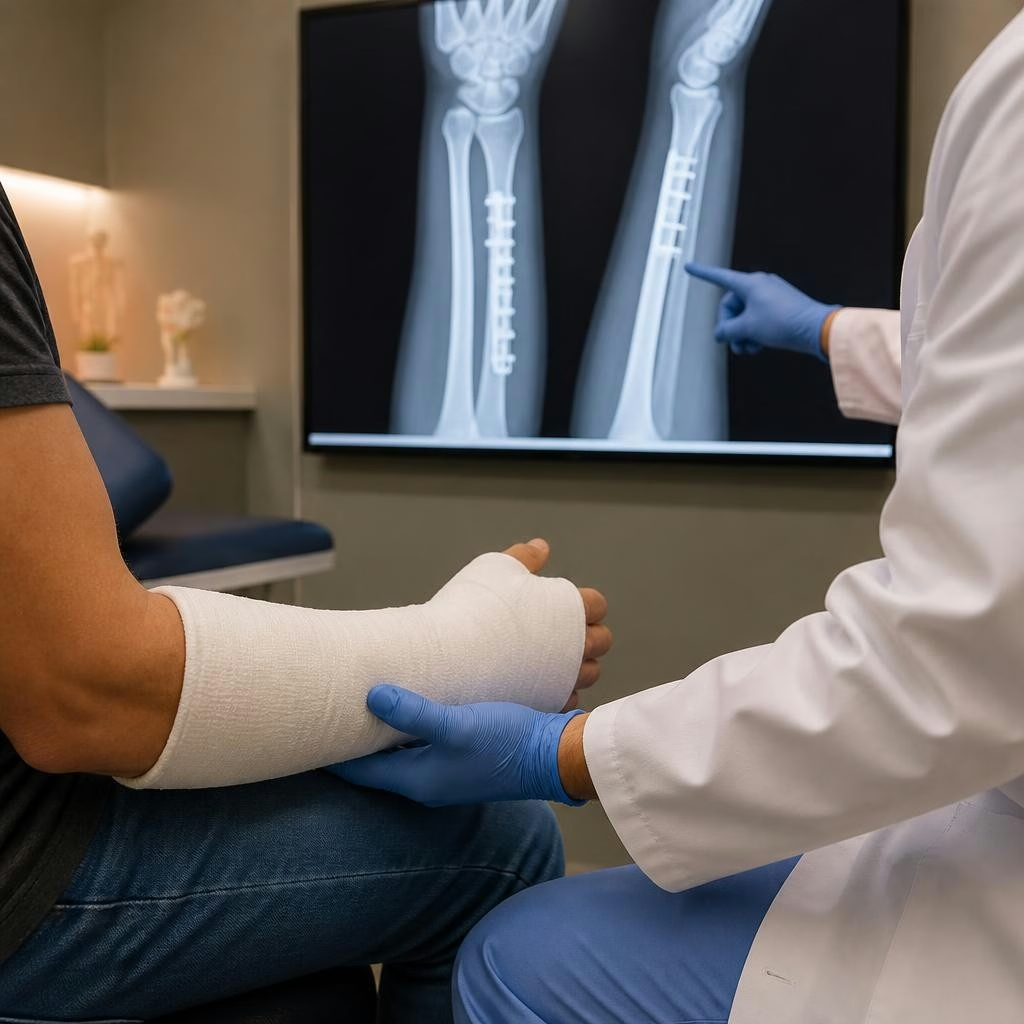
A brief welcome from your orthopedic surgeon
I’m Dr. Schauder of Bay Area Sports and Orthopedics in Houston. If you or someone you care for has just sustained a broken bone, the next hours and weeks can feel uncertain. My goal in this article is to explain, in straightforward terms, how fractures are classified, what happens in the emergency setting and during an orthopedic evaluation, why some breaks require surgery while others heal in a cast, and what to expect from recovery and rehabilitation. Understanding the steps helps reduce anxiety and improves outcomes.
How fractures are classified
Fractures are described to convey how they will behave and what treatment is likely to be needed. Common classification points include whether a fracture is displaced (bone fragments shifted) or nondisplaced (fragments aligned), whether it extends into a joint, whether it is open (skin broken) or closed, and the fracture pattern (simple, spiral, comminuted/many pieces). We also consider the patient’s age, bone quality, and activity level. These factors together guide whether non-surgical care or surgical stabilization is most appropriate.
Immediate steps in the emergency setting
In the emergency department the priority is pain control, protecting the injured limb, and checking circulation and nerve function. Simple immobilization with a splint or temporary cast prevents further displacement. Open fractures require prompt cleaning and antibiotics to reduce infection risk. Tetanus status is reviewed if skin is broken. The emergency team stabilizes you and arranges imaging and orthopedic consultation when needed—this initial care sets the stage for definitive treatment.
Orthopedic evaluation and imaging
When you see an orthopedic surgeon, we review your history, examine the limb for alignment and neurovascular status, and obtain appropriate imaging—usually X-rays. For more complex injuries or injuries involving joints, additional imaging such as CT or MRI may be used to see bone fragments and soft tissues in greater detail. At Bay Area Sports and Orthopedics we combine that information with your goals (returning to work, athletics, or daily life) to recommend a tailored plan.
Non-surgical care: splints, casts, and bracing
Many fractures can heal reliably without an operation. When alignment is acceptable and the bone is stable, we typically immobilize the area with a cast, functional brace, or removable splint. Healing timelines vary by bone and patient factors, but we monitor progress with periodic X-rays and follow-up visits. Early controlled motion is sometimes used to reduce stiffness—your plan balances protecting the fracture and preventing joint stiffness or muscle loss.
When surgery becomes the best option
Surgery is recommended when a fracture is unstable, significantly displaced, involves a joint surface, is open, or fails to stay aligned with non-surgical care. The goal of operative treatment is to realign the bone and stabilize it so it can heal in the correct position, restoring function and reducing the risk of arthritis in joint fractures. At our practice, surgical decisions are individualized: I discuss the anticipated benefits, the risks, and the expected recovery so you can make an informed choice.
Rehabilitation and returning to activity
Rehabilitation is a critical part of fracture care. After initial healing, physical therapy helps restore range of motion, strength, and balance—especially important for athletes and active adults. Timelines vary: some patients resume light activity in weeks, while full strength and sport-specific conditioning may take months. We coordinate closely with therapists and, when appropriate, with schools or teams to guide a safe, graded return to play. Many patients we see make excellent recoveries; as one recent patient described, coordinated care and follow-up helped them regain function within months after significant injuries.
What you can expect from our team in Houston
At Bay Area Sports and Orthopedics (12827 Gulf Freeway, Houston), our focus is on restoring the whole patient—getting you back to work, sport, and daily life safely and efficiently. You’ll find a team that prioritizes clear communication, timely follow-up, and practical rehabilitation plans. If you have questions after an injury, call our office to arrange an evaluation so we can outline the most appropriate steps for your recovery.
Customer review


Article by
Dr. Schauder - Houston
Dr. Schauder was born in Detroit, Michigan. He received his undergraduate degree from Albion College, Albion, Michigan in 1981 Summa Cum Laude with a 4.0 GPA, Phi Beta Kappa, Albion Fellow. Dr. Schauder is an orthopedic surgeon with over 20 years of experience in orthopedic surgery and sports medicine . Dr. Schauder is very active in the sports community. He has played football through college and has played and coached his sons in soccer. Dr. Schauder has been the team physician for Alvin High School Sports since 1990. Our concern is for the total well-being of the patient and to return the patient back to their active lifestyles including sports and work as soon as possible.