Getting Back in the Game After Knee Surgery: Practical Return-to-Sport Guidelines for Houston Athletes
Dr. Schauder outlines typical timelines, objective clearance criteria, and a staged plan for returning to sport after ACL reconstruction, meniscus repair, or other knee procedures—so Houston athletes and parents can set realistic, safe expectations.
Why a careful, sport-specific plan matters
As an orthopedic surgeon who has worked with athletes for decades and served as a team physician for local high school teams, I’ve seen how a structured return-to-sport plan reduces re-injury risk and speeds safe recovery. “Back to play” isn’t a single moment but a staged process that balances tissue healing, strength and movement control, and sport demands. This article explains typical timelines and the functional criteria I use to clear athletes after ACL reconstruction, meniscal repair, or other knee procedures so families and coaches in Houston can plan ahead.
Typical timelines by procedure (what to expect)
Timelines vary by procedure and by the individual. Broadly speaking: arthroscopic procedures with minimal repair (for example, partial meniscectomy) often allow a return to non-contact activities earlier, sometimes within a few weeks to a couple of months; meniscal repairs and procedures that require the meniscus to heal generally take longer—often several months; ACL reconstruction commonly requires a longer rehabilitation window measured in months rather than weeks. These are general expectations: your exact timeline will depend on the specifics of your surgery, graft or repair type, tissue healing, and progress in rehabilitation.
Objective clearance criteria I use
When considering clearance, I focus on measurable, functional benchmarks rather than a calendar date alone. Key elements include: adequate pain control and minimal swelling; near-full range of motion compared with the uninvolved side; strength and muscular control—measured clinically or with objective testing; successful performance on sport-relevant functional tests (for example, hop tests, agility drills, or timed power tasks); and the athlete’s ability to perform progressive sport tasks without compensatory movement patterns. Psychological readiness—confidence to perform sport tasks without fear—is also important and often overlooked.
How sport type changes the approach
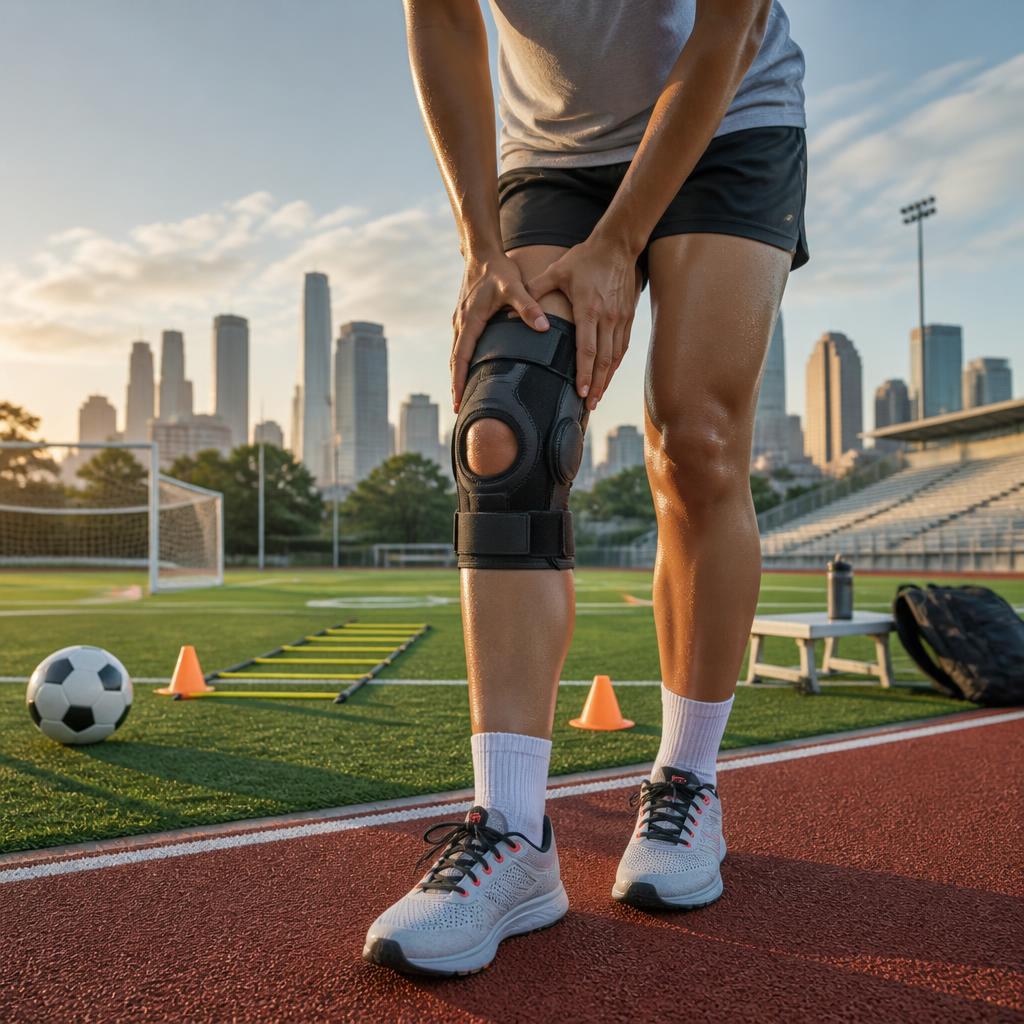
Not all sports demand the same movements. For straight-line endurance sports (long-distance running), the emphasis is on load tolerance and progressive mileage. For fast-cutting, pivoting sports—such as soccer and football—we place greater emphasis on lateral control, change-of-direction drills, and contact-readiness. Contact sports add another layer: athletes must demonstrate reliable neuromuscular control in unpredictable situations and be prepared for collisions. I tailor the progression and final clearance to the demands of the athlete’s specific sport and position.
A staged return-to-sport progression
A practical staged plan moves athletes through progressive phases: protect and restore (early ROM, basic strength), build strength and control (closed- and open-chain strengthening, balance), functional transition (plyometrics, single-leg drills, sport-specific movements), controlled practice (non-contact team drills and limited practice reps), and full participation (unrestricted practice and competition). Each stage includes measurable goals; for example, controlled hopping, symmetrical movement patterns, and controlled practice without swelling or pain before advancing to full contact.
Team coordination: surgeon, therapist, coach, and family
Successful return-to-sport is a team effort. I work closely with physical therapists to track objective improvements, communicate with coaches about on-field progression, and involve parents in pacing and expectations for younger athletes. As someone active in the local sports community, I encourage open communication so everyone—athlete, therapist, coach, and family—understands the plan and the criteria for moving forward.
What to expect at Bay Area Sports and Orthopedics and next steps
At Bay Area Sports and Orthopedics we provide arthroscopic knee and shoulder procedures, ACL reconstruction, meniscal repair, and comprehensive fracture and ligament care, and we emphasize individualized rehabilitation and follow-up. Patients often tell me they value a caring approach and coordinated staff support; one recently shared that after significant injuries he regained good function in a few months with focused care and follow-up. If you or your athlete is preparing for or recovering from knee surgery, schedule an evaluation so we can outline a realistic, sport-specific return-to-play plan based on your procedure, progress, and athletic goals.
Customer review


Article by
Dr. Schauder - Houston
Dr. Schauder was born in Detroit, Michigan. He received his undergraduate degree from Albion College, Albion, Michigan in 1981 Summa Cum Laude with a 4.0 GPA, Phi Beta Kappa, Albion Fellow. Dr. Schauder is an orthopedic surgeon with over 20 years of experience in orthopedic surgery and sports medicine . Dr. Schauder is very active in the sports community. He has played football through college and has played and coached his sons in soccer. Dr. Schauder has been the team physician for Alvin High School Sports since 1990. Our concern is for the total well-being of the patient and to return the patient back to their active lifestyles including sports and work as soon as possible.