ACL Reconstruction vs. Non‑Surgical Rehab: A Houston Athlete’s Guide
An experienced orthopedic surgeon explains when ACL surgery is recommended, when supervised rehabilitation may be appropriate, and how sport, age, and activity goals guide the choice for active patients in the Houston area.
Why this decision matters
An ACL tear is one of the more common injuries I see at Bay Area Sports and Orthopedics. The choice between reconstruction and non‑surgical rehabilitation affects short‑term recovery and long‑term knee health, so it should be individualized. In this article I’ll outline the key factors I consider with athletes in the Houston area and nearby communities, and offer practical questions to bring to your appointment.
What surgery and non‑surgical rehab involve
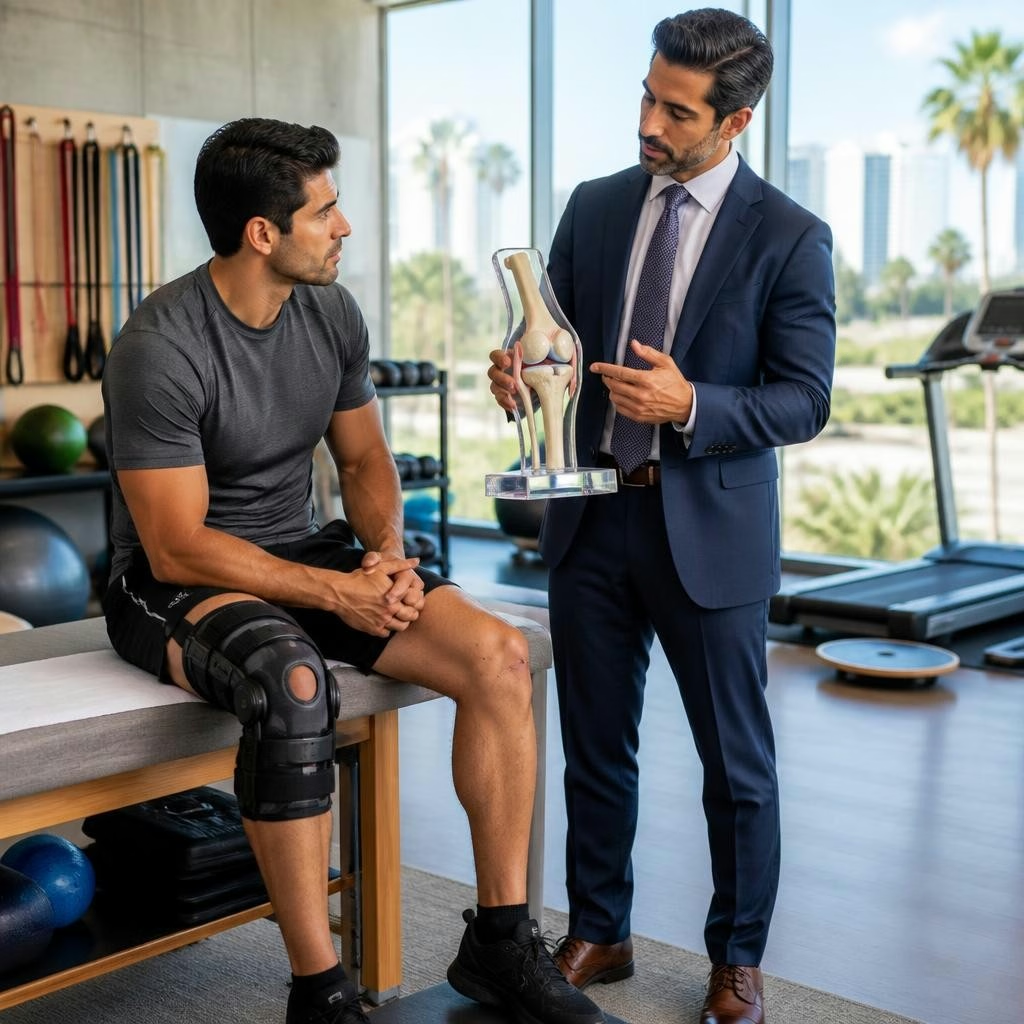
ACL reconstruction reconstructs the torn ligament using a graft and is followed by a structured rehabilitation program. Non‑surgical management focuses on guided physical therapy to restore strength, balance and movement patterns so the knee can function without an ACL. Both paths require committed rehab; the difference is whether the knee’s mechanical stability is restored surgically or managed through muscle control and activity modification.
When I usually recommend reconstruction
I typically recommend ACL reconstruction for athletes who participate in cutting, pivoting or collision sports and who experience instability or repeated ‘giving way’ episodes. Reconstruction is also commonly advised when the ACL tear occurs with other injuries that need surgical repair (for example, meniscal tears that are repairable). The decision also depends on the athlete’s long‑term goals and willingness to commit to reconstruction and the subsequent rehabilitation.
When non‑surgical rehab can be a reasonable choice
Non‑surgical rehab may be appropriate for patients with partial tears who have good dynamic stability, for those whose sport or daily activities do not demand aggressive pivoting, or for individuals who prefer to avoid surgery after discussing the tradeoffs. A successful non‑surgical path requires careful assessment, a progressive strengthening program, and honest follow‑up to detect persistent instability that could harm the meniscus or cartilage.
How age, sport and activity goals influence the plan
Younger athletes and those returning to high‑level competition often favor reconstruction to restore predictable mechanical stability. Older or recreational athletes who can adapt their activity and whose knees remain stable with therapy may reasonably try non‑surgical management first. The crucial point is aligning treatment with what you want to do physically: the same tear can lead to different recommendations for two patients with different sports and goals.
What to expect from recovery and rehabilitation
Both approaches rely on progressive, goal‑oriented rehab focused on range of motion, strength, neuromuscular control and sport‑specific movement. Recovery milestones are individualized and judged by objective strength and functional tests rather than time alone. During follow‑up we monitor knee stability, strength symmetry, and confidence with sport tasks to guide a safe return to activity.
How we decide together and next steps
When you come to my clinic at 12827 Gulf Freeway in Houston, we will review your exam, imaging, activity goals and any associated injuries. Ask about expected outcomes, the rehab plan, and how we’ll measure readiness to return to sport. Many patients appreciate coordinated care and attentive follow‑up—one recent patient described returning to activity quickly after focused treatment and rehabilitation, which reflects the team approach I aim to provide. If you’re deciding between surgery and rehab, schedule an evaluation so we can make a plan tailored to your knee and your goals.
Customer review


Article by
Dr. Schauder - Houston
Dr. Schauder was born in Detroit, Michigan. He received his undergraduate degree from Albion College, Albion, Michigan in 1981 Summa Cum Laude with a 4.0 GPA, Phi Beta Kappa, Albion Fellow. Dr. Schauder is an orthopedic surgeon with over 20 years of experience in orthopedic surgery and sports medicine . Dr. Schauder is very active in the sports community. He has played football through college and has played and coached his sons in soccer. Dr. Schauder has been the team physician for Alvin High School Sports since 1990. Our concern is for the total well-being of the patient and to return the patient back to their active lifestyles including sports and work as soon as possible.